
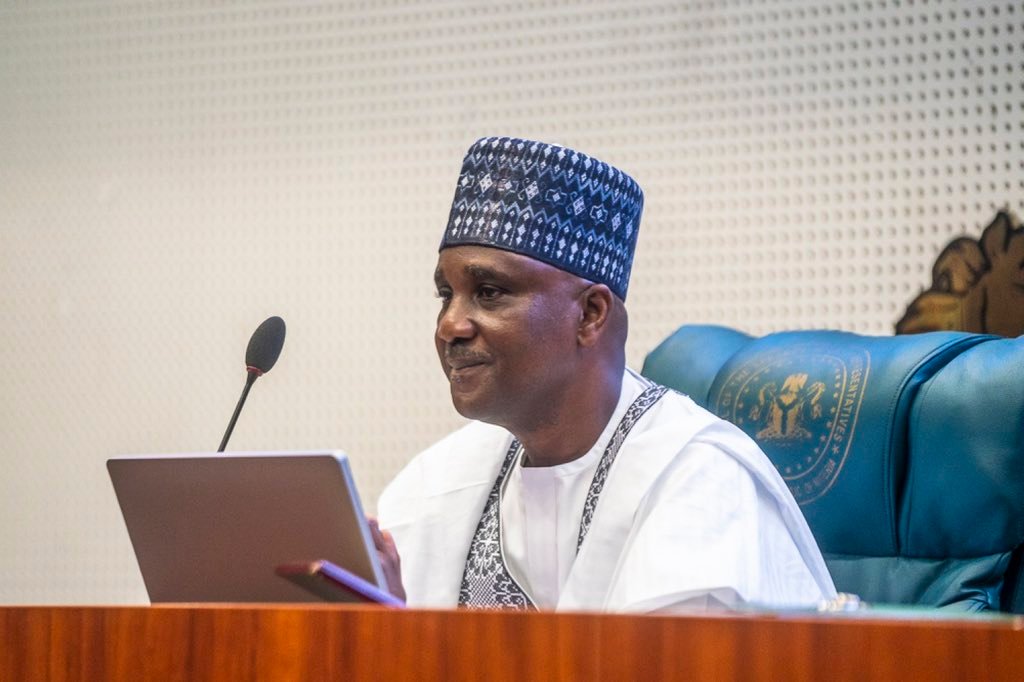
60 Percent of African Women lack Basic literacy skills, Says Speaker Abbas
Speaker of the House of Representatives Abbas Tajudeen said on Thursday that nearly 60% of African women lack basic literacy skills, a stark barrier to both personal advancement and national development.
The Speaker, however, applauded the resilience of Nigerian women who, despite all odds, have triumphed in their chosen careers, setting the pace for others to follow.
The Speaker spoke at the Nigerian Women Leadership and Empowerment conference with the theme, “Investing in Nigerian Women, Securing Our Future,” organised by the House Committee on Women Affairs.
Speaker Abbas said that the 1999 Constitution (as amended) underscores that the security and welfare of the people is the primary purpose of government (Section 14[2][b]), while emphasising that “the State social order is founded on ideals of Freedom, Equality, and Justice” (Section 17[1]).
According to him, Section 42 of the Constitution prohibits discrimination on the basis of sex, reinforcing the fundamental principle that no Nigerian woman should be held back by law or custom, adding that in building a just and progressive Nigeria, it is impossible to overstate the importance of promoting women’s welfare and upholding the spirit of our Constitution.
The speaker said, “Nigeria’s history is replete with courageous women whose remarkable contributions have shaped the country’s trajectory. The pioneering women of our past, who broke barriers with steadfast resolve, laid the foundation for the progress we witness today.
“Their legacies urge us to continue the vital work of forging an inclusive, just, and prosperous nation, one grounded in constitutional ideals of equality and social welfare. Their stories remind us that we must not only dream of a better future but also act decisively to create it, ensuring that every Nigerian woman can thrive.
“In our present global and domestic context, investing in Nigerian women is not a luxury, but a strategic imperative. Empowerment drives economic growth, fortifies food security, and strengthens the core of our communities. When we invest in our women, we invest in our farms, our markets, and in every child’s future.
“We have seen Rwanda set a powerful precedent by using gender quotas to propel more women into positions of power, yielding progressive legislation and community transformation.
“We have also witnessed how microfinance initiatives in Bangladesh revitalised local economies by enabling women to become successful entrepreneurs. These examples should galvanise us to create a future in which Nigerian women, equipped with the necessary resources and opportunities, can elevate our nation to extraordinary heights.
“Despite the achievements we celebrate, significant challenges persist. Discriminatory social norms, limited access to education, and economic marginalisation constrain the vast potential of our daughters and sisters.
“Nearly 60% of African women lack basic literacy skills—a stark barrier to both personal advancement and national development.
“Equally pressing is women’s underrepresentation in our political institutions. Earlier this week, on Monday, 24th February, I led a sensitisation campaign on drug abuse and gender-based violence in Kaduna, reflecting my unwavering resolve that our women must be not only safe but also empowered to succeed in all spheres of life.
“Addressing these issues is fundamental, not only for the well-being of women but also for nurturing safer, healthier communities across Nigeria. Our response to these challenges must be bold and pragmatic.
“Under Section 17 of the Constitution, which guarantees equality of rights and opportunities. The 10th House of Representatives has introduced a Legislative Agenda that prioritises women’s political participation and economic empowerment.
“As part of these commitments, the House has created two committees specifically dedicated to women’s issues and ensured the inclusion of all female members of the House in the Constitution Amendment Committee.

“Additionally, only yesterday(Wednesday, February 36), I formally requested our party, the All Progressives Congress (APC), to include all its female members in the party’s National Executive Committee (NEC), resulting in four women now holding NEC positions.
“Such measures are vital to guaranteeing that women’s perspectives actively inform the legislative framework and policy directions guiding our national development.
“Within this Agenda, we also advocate for legislative reforms that reintroduce special seats for women in our legislative houses and mandate quotas within political parties, thereby securing meaningful representation for women in public office.
“I call on all State Houses of Assembly to endorse these proposals when they come forward in the Constitution Amendment process. By doing so, we uphold the Constitution’s mandate to foster social welfare and equality for every citizen.
“Beyond the political realm, we must continue to expand targeted funding programmes that empower female entrepreneurs to drive innovation and generate employment opportunities. I understand that this conference dedicates a session to that subject, and I encourage you to explore practical approaches.
“These may include implementing robust microfinance schemes tailored specifically to the needs of Nigerian women, complemented by government-led training, mentorship, and capital access initiatives for women-owned enterprises.
“Learning from global best practices and adapting them to the Nigerian context will allow us to unlock women’s immense potential, cultivating economic growth that benefits us all.
“On our part, the Tenth House of Representatives remains firmly committed to securing justice and equity for Nigerian women.
“In line with the Constitution’s ideals, we shall continue to exercise diligent oversight of government institutions to ensure adherence to the National Gender Policy, bolster the women’s caucus to champion gender-specific issues effectively, and support electoral reforms that ensure a fixed quota of female candidates while providing special seats for women in both the Senate and the House.
“We will also enact robust legislation to safeguard women in politics from violence and intimidation, thereby aligning our political framework with the Constitution’s principles of fairness and freedom. Concurrently, the ongoing amendments to the Violence Against Persons (Prohibition) Act (VAPP) aim to address contemporary challenges and fortify women’s rights.”