
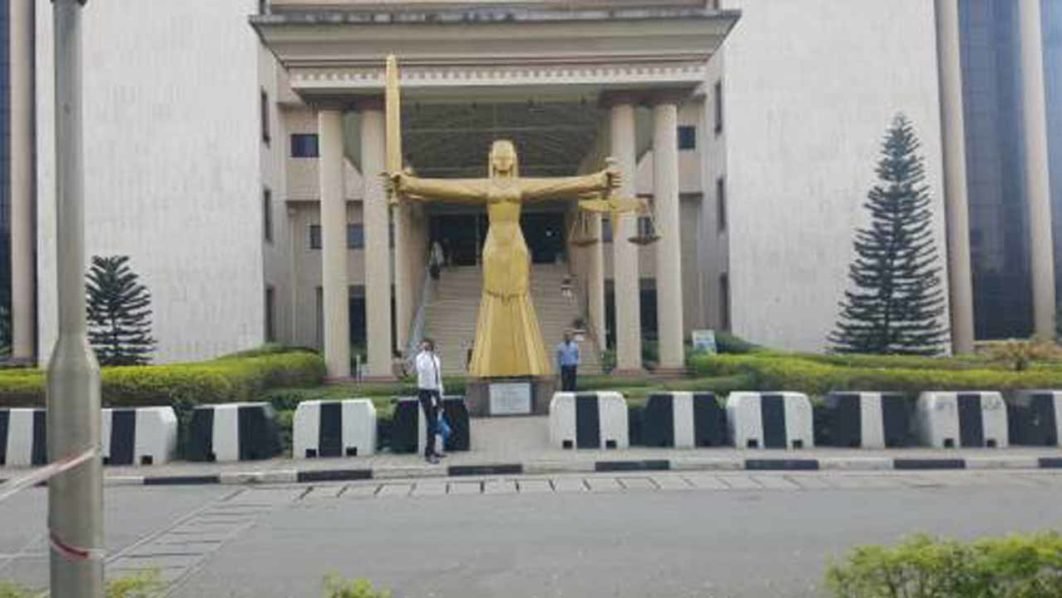
Inheritance: Amina & Ahmed and challenges Dr Musa Wen Ibrahim & Emir of Wamba, Lawal Musa Nagogo to High Court, Abuja
Amina Isyaku Ibrahim and Ahmed Isyaku Ibrahim have through their Lawyer file at High Court of the Federal Capital Territory, Abuja, with number CV/4235/25 where her petition challenges religious and gender-based discrimination in the administration of her late father’s estate, NIIMA (Carpet) Manufacturing Limited.
Religious Freedom and the Alhaji Isyaku Ibrahim Estate Case
In Amina Isyaku Ibrahim & Ahmed Isyaku Ibrahim v. Musa Wen Ibrahim & HRH Lawal Musa Nagogo, filed through their Counsel, international human rights lawyer, Dr. Charles Adeogun‑Phillips, SAN, the Applicants — sister and brother — allege discrimination based on religion and gender in the handling of their late father Alhaji Isyaku Ibrahim’s estate.
The late Alhaji Isyaku Ibrahim, a distinguished businessman, philanthropist, and political elder, was a practising Muslim who married Mrs Charlotte Jamila Ibrahim, a practising Christian, in Monrovia, Liberia, under statutory law in 1974. Their union embodied harmony and mutual respect.
Religious Freedom and the Alhaji Isyaku Ibrahim Estate Case
Their children, Amina and Ahmed, were lovingly raised in a harmonious inter-faith household, celebrating both Christian and Muslim traditions as part of one inclusive family.
Following their father’s death in August 2025, the Applicants claim they were excluded from inheritance discussions on account of their Christian faith, and that in Amina’s case, her gender was cited as a further basis for exclusion.
Their claim invokes Sections 38 and 42 of the Constitution of the Federal Republic of Nigeria (1999, as amended), guaranteeing freedom of religion and protection from discrimination, and Articles 2 and 3 of the African Charter on Human and Peoples’ Rights (Cap A9, Laws of the Federation of Nigeria 2004).
They further allege that ₦800 million realised from the sale of a 5.44‑hectare factory property was misappropriated without lawful probate authority, under the guise of Islamic personal law.

Her petition asks the Court to declare that exclusion from inheritance on religious grounds contravenes those same guarantees — making the suit a tangible test of whether constitutional promises of liberty and equality hold true in practice at family and customary levels.
The case raises significant questions about how Nigeria’s plural legal system reconciles statutory and personal law, especially within mixed-faith families. It brings into sharp focus the constitutional and procedural boundaries governing the administration of estates where heirs belong to different faiths or where customary influences attempt to override statutory safeguards.
At the heart of the dispute is the fact that the respondents — neither of whom are next of kin nor members of the family — began administering the estate of Alhaji Isyaku Ibrahim without lawful authority; no Letters of Administration had been granted, and no probate process had been concluded.
This unilateral assumption of control over the estate, under the guise of religious injunctions, raises a fundamental legal question: can an estate be lawfully administered, or its assets disposed of, without formal authority from the court?
The outcome of this case will therefore do more than address individual grievances; it will help clarify how far religious or customary practices may go before they infringe on constitutional and statutory law. It also underscores the urgent need for judicial guidance to prevent future instances where estates are managed outside the scope of recognised legal process. In this broader context, the proceedings stand as a reflection of Nigeria’s ongoing effort to balance faith, custom, and the rule of law in protecting every citizen’s equal rights.