PANEL PROBES TREATMENT OF CHILDREN, YOUNG PERSONS IN NIGERIAN CORRECTIONAL FACILITIES – WATCH VIDEO
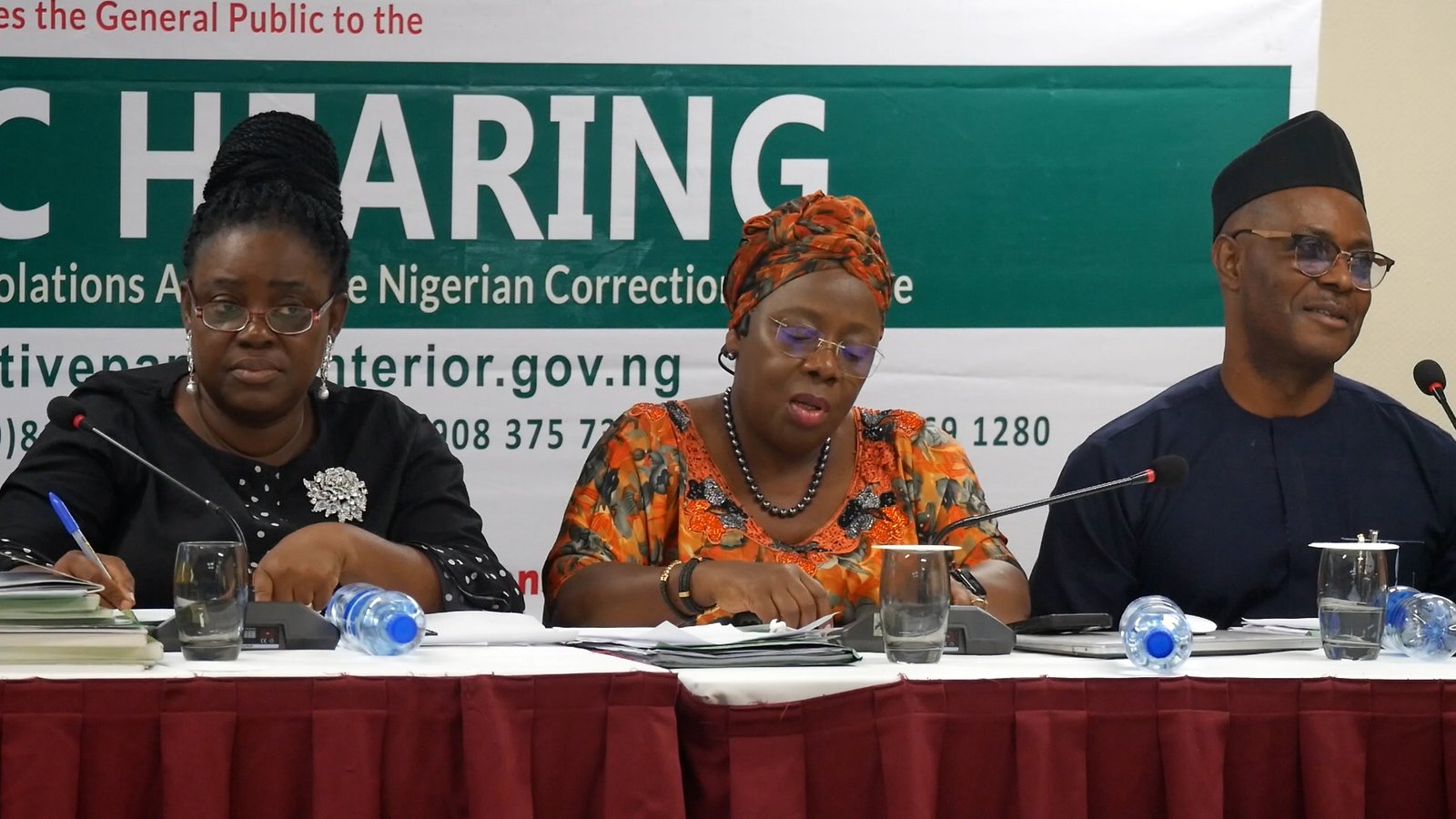
The Independent Investigative Panel on alleged corruption and other violations against the Nigerian Correctional Service on Monday opened its third public hearing in Abuja with a focus on the treatment of children and young persons in custody.
The panel also interrogated the state of remand homes and informal places of deprivation of liberty.
Declaring the hearing open, Panel Chairperson Dr. Magdalene Ajani, who is the permanent secretary of the ministry of Interior,said the sitting was to examine corruption, abuse of power, and human rights violations within the correctional system, with a view to identifying systemic gaps and recommending reforms.
Health and Welfare Official for the Correctional Service, Abdullahi Shehu, told the panel that while the Correctional Service Act 2019 provides for separate borstal and training institutions for male and female young offenders, only three male borstals — in Abeokuta, Ilorin, and Kaduna — are currently functional. He stressed the need for adequate profiling of young offenders to guide rehabilitation programs.
Speaking for the Nigerian Society of Clinical Psychologists, Dr. Abigail Oni warned that minors in adult facilities face severe emotional, psychological, and developmental trauma. She called for the immediate relocation of all underage detainees to remand homes or juvenile correctional centres, the establishment of such facilities in every senatorial district, and the introduction of structured rehabilitation programs led by qualified psychologists.
Representative of the Comptroller General of the Correctional Service, DCG Ibrahim Idris said no minors were admitted into custodial centres during the last nationwide protests, noting that those arrested were rejected due to age and kept at police stations. He, however, lamented that many state government remand homes were not functioning, creating pressure to transfer Under-18 offenders to correctional centres.

In response to the presentation, Dr. Ajani directed the Nigerian Correctional Service to, within four weeks, submit a detailed report on the status and classification of the Ilorin facility, as well as take urgent action to address the poor sanitary conditions at the Abeokuta borstal home.
She further ordered that a comprehensive status report on all borstal institutions, whether gazetted or not , be submitted to the panel within two weeks.
Panel Secretary Dr. Uju Agomoh highlighted the need for a mapping of all state facilities for young offenders, proper classification of custodial and halfway homes, and strengthening of collaboration between the Correctional Service and state agencies.
The day’s deliberations also touched on informal detention centres, the plight of children born in female custodial facilities, drug rehabilitation for young offenders, and the need for more clinical psychologists within the system.
The panel is expected to receive further testimonies and evidence in the coming days as the third public hearing continues.