
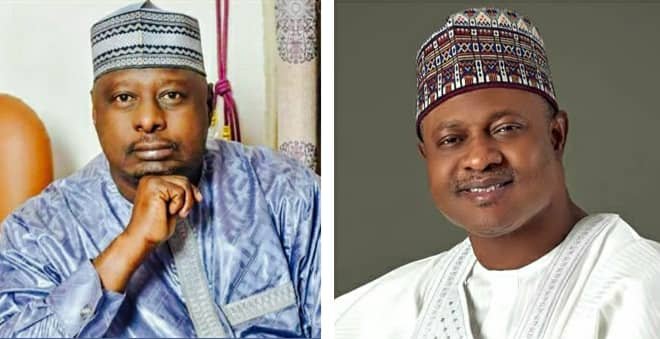
Records on Trial: Nineteen Days After the Five-Project Challenge, Ashiru Has Yet to Answer
Nineteen days after a public challenge asked Isa Mohammed Ashiru to name five verifiable projects or constituency interventions from his eight years in the National Assembly, the African Democratic Congress governorship candidate has still not produced an answer.
The challenge was issued on August 23, 2026, in the middle of a sharpening debate over Governor Uba Sani’s record as Senator representing Kaduna Central. It remains publicly available online, addressed directly to Ashiru and his supporters, and nineteen days on, the question stands unanswered. The original post can be viewed at https://x.com/abdoulrahman_i/status/2091540851784548516
The timing matters. With the 2027 campaign gathering pace, Kaduna’s political contest is turning from a battle of promises and rhetoric into one of records: what each candidate has actually done, what can be substantiated, and what voters can check for themselves.
A SIMPLE TEST OF ACCOUNTABILITY
The exchange began with criticism of Governor Sani’s record in the National Assembly. A commentator using the handle VOID responded by pointing to the Faculty of Engineering at Kaduna State University’s permanent site in Rigachikun as one documented intervention tied to Sani’s tenure as Senator, alongside a broader legislative and constituency record spanning education, healthcare, water, youth development and infrastructure.
Rather than leave the argument at the level of competing claims, the challenge proposed a straightforward test: if Sani’s record was fair game, then Ashiru should be able to name five comparable projects, interventions or legislative achievements from his own eight years in the National Assembly.
The request was not complicated, and it did not ask for a full audit of his parliamentary career. It asked for five. Nineteen days later, those five have not been produced.
THE KASU ENGINEERING FACULTY QUESTION
Part of what keeps the challenge alive is that the claim about Sani’s record points to a specific project with a public paper trail. The Faculty of Engineering’s permanent site in Rigachikun has been linked to Sani’s intervention since before the current campaign season began.
In July 2023, Radio Nigeria Kaduna reported that KASU’s Vice Chancellor, Professor Abdullahi Ibrahim Musa, credited Sani with helping secure funding for the Engineering Faculty through the Central Bank of Nigeria, with additional support from TETFund and other partners. Earlier reporting by TheCable and Blueprint had already listed the Engineering Faculty among the interventions associated with Sani’s time in the National Assembly.
None of this means every claim about the project should be taken at face value. It means there is a specific project, a public record, and claims that can be independently checked — which is the same standard the August 23 challenge asked Ashiru to meet.
EIGHT YEARS IN THE HOUSE
Ashiru’s own history makes the question a fair one. He spent eight years in the House of Representatives; Sani spent four in the Senate. Both, in other words, have legislative records that can be examined.
The question is not whether Ashiru accomplished anything in the National Assembly — that would call for a far broader assessment than anyone has proposed. It is narrower: which five constituency projects, interventions or legislative achievements from his eight years should Kaduna voters weigh against Sani’s record? If there are five, they can be named. If there are more, voters should hear about them. As it stands, the five from the original challenge have not been named.
THE SAME STANDARD SHOULD APPLY
The question has taken on more weight because Ashiru has himself continued to press for accountability from the Sani administration. On August 31, he publicly called on the Governor to give a full account of federal interventions received by Kaduna State since May 2023 — funding, projects, implementing agencies and levels of execution — and raised questions about the state’s management of internally generated revenue.

There is nothing wrong with an opposition candidate demanding that kind of accountability; scrutiny of this sort is a normal and healthy part of democratic politics. But it cannot run in one direction only. If Ashiru expects Sani to produce evidence and documentation for his record, the same expectation should apply when Ashiru’s own record in public office comes under examination. A former legislator seeking the state’s highest office should be as ready to account for his work as he expects the incumbent to be.
FROM RHETORIC TO EVIDENCE
This matters more as the 2027 campaign builds momentum. Competing claims about achievements and failures are a normal feature of any election, but voters should not have to decide between them based on who campaigns loudest. They should be able to compare records — the projects, legislation, interventions and outcomes each side can actually point to.
Recent exchanges over education funding and the situation at Kaduna State University have made the same point in miniature: Ashiru has criticised the state government’s handling of KASU, and the government has in turn asked him to support his claims with verifiable facts. The same evidentiary standard ought to govern the wider political conversation.
NINETEEN DAYS LATER
When the challenge was issued on August 23, it might easily have passed as one more exchange on social media. Nineteen days later, it has become a genuine test of political accountability — one Ashiru and his campaign have had ample opportunity to meet.
The request remains simple: name five projects, interventions or legislative achievements from eight years in the National Assembly that voters can check for themselves. No personal attacks are required, and none are being asked for. Sani’s supporters have put forward a specific intervention and a broader legislative record for public scrutiny. Ashiru and his team have had the same opportunity to do the same with his own record.
The challenge remains open. As of September 11, 2026 — nineteen days after it was first issued — the question has not changed: what are the five?
By Evang Sarah Ahu
Opinion