

Taliban Declare Eid Holiday Ceasefire As Violence Soars In Afghanistan
The Taliban on Monday declared a three-day ceasefire for this week’s Eid al-Fitr holiday, following a sharp spike in violence as Washington goes about withdrawing its remaining troops from Afghanistan.
Violence has soared since May 1 — the deadline missed by the United States to withdraw the last of its troops — and while the Taliban have avoided engaging American forces, attacks against government and civilian targets have not stopped.
In the latest, the interior ministry said Monday that at least 11 people were killed by a bomb that struck a bus overnight in southeastern Zabul province.
That followed Saturday’s carnage outside a school in the capital Kabul when a series of bombs killed at least 50 people and wounded over 100 — most of them young girls.
Early Monday, the Taliban instructed fighters “to halt all offensive operations against the enemy countrywide from the first till the third day of Eid”.
Eid al-Fitr marks the end of the Muslim fasting month of Ramadan, and the holiday begins according to the sighting of the new moon.
The Taliban declared similar ceasefires last year to mark Islamic holidays.
The government usually reciprocates, but Afghan peace council chief Abdullah Abdullah said Monday what the country needs is a permanent ceasefire.
“We believe the best solution to get out of the country’s crisis is expediting peace talks, declaration of lasting ceasefire and ending the fighting forever,” he said in a statement.

On Saturday, a series of bombs detonated outside a girls’ school in Dasht-e-Barchi, a suburb of the capital largely populated by the Shiite Hazara community which is often targeted by extremist Sunni Islamist militants.
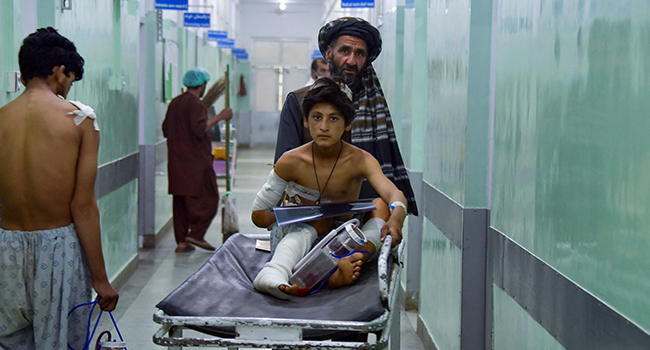
It was the deadliest attack in more than a year and came as residents were shopping ahead of the Eid holiday.
On Sunday, on a desolate hilltop cemetery, bodies in small wooden coffins were lowered into graves, one by one, by mourners still in shock.
“I rushed to the scene and found myself in the middle of bodies, their hands and heads cut off and bones smashed,” said Mohammad Taqi, whose two daughters were students at the school but escaped the attack.
“All of them were girls. Their bodies piled on top of each other.”